Showing posts with label Theorists. Show all posts

Tuesday, 5 February 2019

Theorists

Todorov: Equilibrium theory

-         Traditional narratives follow a 3 part structure of beginning middle and end which unfolds in a narrative arc of 4 phases: 1. Exposition, 2. Introduction to conflict, 3. Climax, 4. Resolution

-         Narrative is usually a chronological and linear sequence of themes, actions and motives.

-         Todorov identifies that the 3 part structure has 5 stages:

o   Narrative begins with an equilibrium

o   The Equilibrium is usually disrupted by and event to create disequilibrium


Strauss- Binary Oppositions

-         Identified that we understand the world by the relationship that two opposites have together.

-         He believed that narratives are arranged around the conflict of binary oppositions.

-         Some of these oppositions could include:

o   Man vs women

o   Good vs bad

Friday, 10 November 2017

Tuesday, 7 November 2017

Thursday, 12 October 2017

Theories and Theorists

Language
Steve Neale - Genre repetition and difference

Roland Barthes - Semiotics - Denotation, Connotation

Audiences
George Gerbner - Cultivation
Stuart Hall - Reception, how audiences read a media text. Dominant, Negotiated, Oppositional
Albert Bandura - Effects
Hypodermic Needle

Monday, 9 October 2017

Albert Bandura


Social Learning Theory Bandura's Social Learning Theory posits that people learn from one another, via observation, imitation, and modeling. The theory has often been called a bridge between behaviorist and cognitive learning theories because it encompasses attention, memory, and motivation.

Start Hall


Reception theory is generally referred to as audience reception in the analysis of communications models. ... Hall also developed a theory of encoding and decoding, Hall's theory, which focuses on the communication processes at play in texts that are in televisual form.

Friday, 22 September 2017

Steve Neale

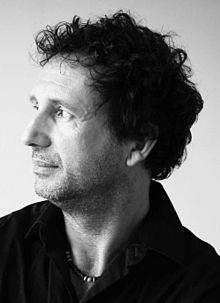
Image result for steve nealeSteve Neale

Genres are instances of "repetition and difference", and that they are systems of expectations and conventions that circulate between industry, text and subject.
He says, "genres are not systems they are processes"- they are dynamic and evolve over time.
Genres can be seen as "a means of controlling demand"
Genre is constituted by "specific systems of expectations and hypothesis which spectators bring with them to the cinema and which interact with the films themselves during the course of viewing process."

Deutschland 83- representation- screen grab and analysis.

https://docs.google.com/document/d/1r36RS_DcuCOVpmS1pqZCX4zsvXKWB-FixLj5Mp-dYyQ/edit?usp=sharing