Friday, 20 October 2017

Young minds video and evaluation


1) What was the task you were given and who was your target audience? As the audience wasn't typical of the product how did you manage to sell it? What was the name of your brand?  
Once being put into groups we were happily given the topic 'Teen issues". From this started point we initially thought of bullying and depression, soon after researching the "young mind" advert we took inspiration from that at extended the idea of 'depression' further. Our main target audience were high school kids struggling with loneliness, feeling unwanted and worthless, an issue that has massively spread across the world. By creating a youtube video we knew this would be the best way to attract our audience, in our video we wanted to show the same perspective that sense of feeling alone and not fitting in. We decided by creating young minds it would make us feel closer to the target audience and make them feel more connected to our story, all in hope to make them feel comfortable to come and receive help from our charity 'Young Minds". 

2) Who did you work with and how did you divide the research, planning, filming and responsibilities?
In my group was Josh, Abby and Emily . In our planning, we gave out different roles to our team. A few examples are editor, cameraman and actors as well as other small jobs such as getting props and making a filming schedule. By giving each other a role, we were able to divide the research work. This meant each member of our group were responsible for at least one feature, getting everyone involved. For filming, we had one main cameraman and the rest of the group added in opinions and ideas to get the best shot for the scenes. 

4) What research and planning did you undertake? We researched three other similar existing adverts for similar topics, depression and mental health, and took some ideas on how to piece together an advert raising awareness for a real life problem that affects so many. With these three videos we evaluated them to see the good effective parts and what could be improved. As well as this we created a storyboard to see how the different scenes would look when pieced together and if we could put the scenes in a different order to improve the video.


5)  Feedback:      
  • "The Quality is really good, perhaps create your own charity and slogan"
  • "Its very effective and really well promoted. However in the classroom scene i focused more on Connor as i didn't know the main character although as it went on it was very clear.    
  • "After the phone call perhaps have a close up of the main character to show more of her emotion" 
  • "You have good and large variety of camera angles, also good use of video transitions and effects (e.g the black and white effect)"
  • "Perhaps show more emotion than just 'sad' e.g. Anger, frustration, jealously.
6) Identify what went well and with hindsight what you do to improve/ do differently.
The whole idea of our video worked well with our project of a charity for teen issues. Also, the black and white effect sets the mood and our actress played the part well and was very convincing. Next time, our group could do more scenes is a range of places. This would allow more people to relate to this message instead of just teenagers suffering at school. 


8) Looking ahead, how will this learning be significant when completing your future productions?
 
This production will teach me that the colour of your production is very important as it can completely change the personality of the advert alongside the music which changes the whole aspect of the performance. As well as this the different camera angles and shots can create a dramatic effect amongst the audience.

Friday, 13 October 2017

Plan- YOUNGMINDS RESEARCH

Plan

Name- Young Minds
Main Theme- Depression
Music- Sam Smith, Too Good At Goodbyes
Roles- Harriet Putt: Main Actor/ Editor
           Josh Spence: Director
           Emily Benham: Props
           Abby Bezant: Camera/ Editor
Props- School Equipment (eg pen, paper, books)
Costumes- Casual clothes, school bag


Research- Planning for young minds teen awareness video 

NSPCC- Audience: advertising to young children to call NSPCC when in need. 
                Language: Emotive- persuasive language 
                Representation:  A young child coming home from school, with close up of her calling the charity.

Childline- Call center (2005, UK) 


Storyboard

Shot 1: A girl sitting on a table - people laughing around her - in lesson. Black and white.
Shot 2: She opens door to the corridor.
Shot 3: She's walking forward, everyone starts walking towards her.
Shot 4: Focus just on her alone in the corridor - long shot.
Shot 5: Phone the help line number - close up of her typing phone number into phone.
Shot 6: Close up - crying.
Shot 7: Closes the door - colour, charity name across the screen.


Thursday, 12 October 2017

Theories and Theorists

Language
Steve Neale - Genre repetition and difference

Roland Barthes - Semiotics - Denotation, Connotation

Audiences
George Gerbner - Cultivation
Stuart Hall - Reception, how audiences read a media text. Dominant, Negotiated, Oppositional
Albert Bandura - Effects
Hypodermic Needle

Homework- representations

representations- Class

When we think of the different classes we stereotypical think of just how large the gap was between the working/ under class in contrast to the upper class and how each   were treated. when we think of the upper class we think of wealth, and the rich clothing, big hats and gorgeous transport. in comparison  as we follow down the classes each get little and less  off    that. so when we think of the working/udder class we think of  illnesses, uneducated, ragged clothing, and broken large families struggling to pay for rent and food.  Examples shown below:


upper class-


Related image 

middle class-

Related image


working class-


Image result for working  class women victorian era


under class-

Image result for living on the streets women victorian era


Three stereotypes media texts-


Image result for upper class magazines


Representation

Representations 

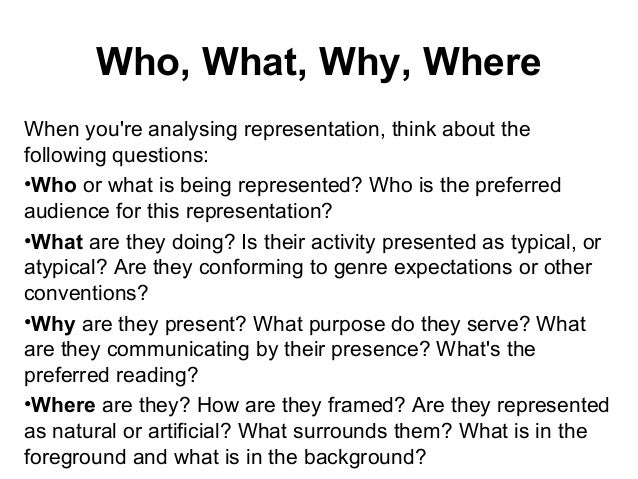
Stereotypes: Media industries use stereotypes because the audience will instantly understand them. Think of stereotypes as a 'visual shortcut'. They're repeated so often that we assume they are normal or 'true'.

Archetypes: This is the 'ultimate' stereotype. for example, the white stiletto wearing, big busted, brainless blonde bimbo.

Countertype: A representation that challenges tradition stereotypes associations of groups, people and places.       


Gatekeepers: This is anyone involved in a media productions with the power to make a decision about something the audience are allowed to read, hear or see- and of course, not get to see; for instance, a newspaper editor has the final say on what goes on the newspaper.  


DR CAGES 

D- DISABILITY
R-REGIONAL IDENTITY

C-CLASS
A-AGE
G-GENDER
E-ETHNICITY
S-SEXUALITY


Child awareness- young mind

Research- Planning for young minds teen awareness video 
NSPCC- Audience: advertising to young children to call NSPCC when in need. 
                Language: Emotive- persuasive language 
                Representation:  A young child coming home from school, with close up of her calling             the charity. 

Childline- Call center (2005, UK) 
                  Audience-pursuading adults and and watchers to donate and ensure alls in need can                be answered.
                   Language- emotive- persuasive language. 
                   Representation- How so many individuals are suffering and are calling child line for help, we heard and see their stories and they use many effects to make it more emotional. 

Sabrina Benaim- "explaining my depression to my mother"- 
                    Audience- carers and parents to listen to their kids and understand the way they are feeling. 
                    Language - very emotive, speech, 
                  Representation - how many people are feeling the same emotion as her yet they all  feel alone, they want people to understand and help. 

Club advert remake


1. Who did you work with and how did you manage the task between you?
I was happily put into a group working with Niamh, Holly, Jen and Olivia. We all worked really well together, Jen took control of the filming I helped directing, and the others acted. To finalise our advert me and holly edited ensuring the correct timing with the music and other elements to make sure the advert fits perfectly for the remake.

2. How did you plan your sequence? what processes did you use?
To ensure a good attempted remake we played the advert and filmed at the same time to make sure camera angles and timing was correct. before filming we did screenshot of the main camera shots and sectioned the last 17 seconds of the advert.

3. What theorists do you think you could apply to your task?
The theorists that we took inspiration wen recreating the advert is Albert Bandura due to the Media Effects. the reason why Albert would it perfectly is because he focuses o how media can implant ideas in the mind of his particular audience and how it can change behaviors of certain people. This can be seen in our video because the Club Bar gives a strong impression of joy an excitement convincing the audience to buy their product.

4. What factors did you have to take into account when planning, shooting an editing? 
The main factors we ad to take into account were the props, main actors, surroundings and effects including the last shot of the club advert.  Also we needed to consider how many people were in the shots and who needs to be the main focus of each scene. lastly we also need to consider the lighting, weather and time in which we need to shoot it as it wouldn't match to the original.

5. How successful was your sequence? Please identify what worked well and with hindsight what would you improve/ do differently? 
I think overall it went very well because we all took in turns to talk and presents ideas that would work best for the remake. Even better if we focused more the camera shots as some wasn't precise. secondly finding a real duck instead of an image on the computer. Thirdly  a real baby to stick as close to the original as possible. 

6. What did others say about our production? 
"i like the way we transitioned from each shot- good editing. It was in time with the advert." 
"i like how everyone played the role really well, and how it looked like the original. would be better i there more people in the park."
"Take more time to plan in creating the scenes for example get more people in 'busy scene' to show it being for lively so it looks similar to the advert. and get a real duck. and don't make the last bit green"

7. What have you learnt from completing this task?
I have learnt what to consider when i need to film an advert eg what props i would need, types of actors that would it the role, lastly knowing the right surroundings eg time, weather, light etc in order to remake an advert. Also more practice with the editing. 

8. Looking ahead, how will this leaning be significant when completing your future productions? 
It will help me to know peoples strengths and weaknesses in my group also including myself. also how planning is the most important to ensure everone knows where and what they should be doing. 


Film industries emaze

Powered by emaze

Feedback- 

What went well- 

  1. "Covered everything really well and all in lots of detail."
  2. "Easy to read and well organised"
  3. "Very factual of all genres and in detail of all the slides presented on the emaze" 
  4. "Many examples of blockbuster and other productions"
  5. "all shared speaking roles and information was clear"

Even better if- 

  1. "Tell us the relevance of the films"
  2. "need more detail about global success"
  3. "less examples of film"
  4.  "was quite repetitive, could've spoken about the other things on the screen"
  5. "Instead of a list, put an analysis or summary" 


Camera angles


Camera angles practise

Monday, 9 October 2017

Albert Bandura


Social Learning Theory Bandura's Social Learning Theory posits that people learn from one another, via observation, imitation, and modeling. The theory has often been called a bridge between behaviorist and cognitive learning theories because it encompasses attention, memory, and motivation.

types of audiences

Audience response

  1. age
  2. gender
  3. situated culture
  4. cultral experiences 
  5. historical competence 
  6. ethnicity 

  • media is used to make money, also attract as large of an audience as possible
  • The idea that audiences accquire attitudes- alot of media is violent and aggressive 

Start Hall


Reception theory is generally referred to as audience reception in the analysis of communications models. ... Hall also developed a theory of encoding and decoding, Hall's theory, which focuses on the communication processes at play in texts that are in televisual form.

Friday, 22 September 2017

Steve Neale

Image result for steve nealeSteve Neale

Genres are instances of "repetition and difference", and that they are systems of expectations and conventions that circulate between industry, text and subject.
He says, "genres are not systems they are processes"- they are dynamic and evolve over time.
Genres can be seen as "a means of controlling demand"
Genre is constituted by "specific systems of expectations and hypothesis which spectators bring with them to the cinema and which interact with the films themselves during the course of viewing process."

Tuesday, 19 September 2017

mise en scene


Mise en scene

  • A french term meaning what is put into a scene a frame.
  • Visual information in front of the camera. 
  • Communicates essential information to the audience.

Clamps-

C- COSTUME 
L- LIGHTING 
A- ACTORS
M-MAKEUP
P-PROPS
S-SETTING

I
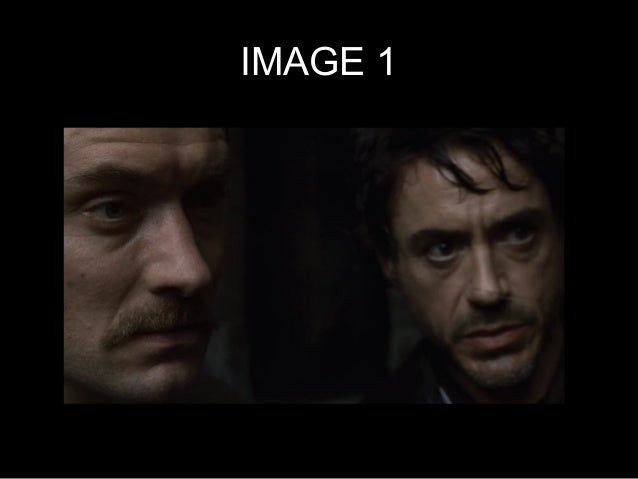
Image one-
From this image we are introduced to two male characters, first impressions I would take that its pictured in the war time I suggested this because of their appearance (facial hair). the background is quite dark and mysterious however the light shines on the characters faces making our eye focus on them. their facial expressions look quite anxious as if they have heard of seen something out of surprise, something they didn't want to hear or know about. their faces look dull, tired and annoyed.
The positing of the characters are close up by doing this we are only focusing on their facial expression stead of the actual reason.

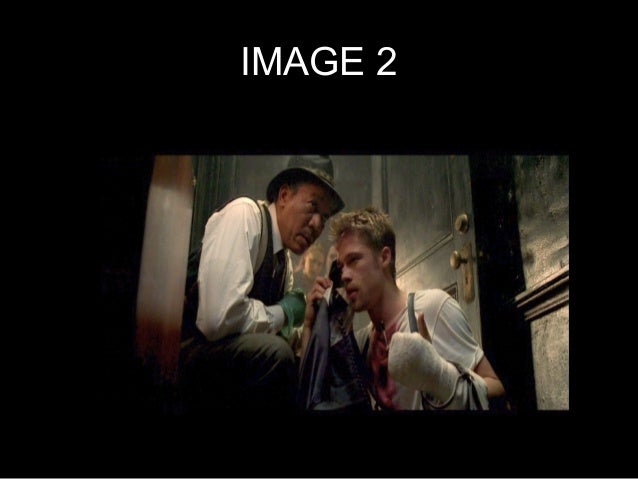
Image Two-
In the second image we are also introduced to two male characters whoever this time one is much older then the other. This is also pictured in a older yarer we know this by the clothing. it feels like a western film. the younger man crouched down on the floor on the phone has blood over his top with his hand bandaged. From this we may suggest that he was in trouble potentially in a fight or committed a crime. the older man is also crouched down but looks over him showing a more worried but caring nature. potentially scared about some upcoming consequence. Both of their faces look worried, scared, nervous it feels like the tension is building in this shot. The overall image is lighted due to his injury. These characters are also centered in the middle showing the importance of the shot.   


Monday, 18 September 2017

Dancing Animals editing lesson.


What went well, what did I learn?
At the beginning i found it a little difficult as i did not know where all the tools were to edit the video but also how to put the correct audio to fit behind it. Never the less after a few tries i finally got the hang of it. I was able to drag multiple videos over the the editing bar to then be able to over lap and cut them to fit with mixed audios that i placed behind it. After ensuring both videos and audios were good i was then able to make it better by putting in video and audio transitions, that includes 3D motions, dissolve videos, slide, special effects, cross fade audios, etc.

Even better if...
For some reason editing the audio became hard to do as it wouldn't let me select it to then place it over the audio. Making the sound finish harsher instead of an overlap. Also i didn't know how to change the color of the video which i thought could have been interesting. Finally the introduction happens quite late so i would want it to bring it forward so we are not waiting forever for it to play.

Friday, 15 September 2017

Film posters

Image result for film posters

Vocabulary


GENRE
Describe
In detail
Setting/location
Themes
Icons
Narrative
Characters
Textual analyses


MISE EN SCENE  
Costume
Lighting
Actors
Make-up
Props
Setting


STEVE NEALE- Genre Theorist "Genre relies on repetition and differences"
Stephen Roy Albert Neale is a British Analytic philosopher and specialist in the philosophy of language who has written extensively about meaning, information, interpretation, and communication, and more generally about issues at the intersection of philosophy and linguistics

Language
Industries
Audience
Representation


SEMIOTICS- The study of signs
Denotation:
The literal or primary meaning of a word, in contrast to the feelings or ideas that the word suggests.
the action of indicating or referring to something by means of a word, symbol, etc.

 Connotation: An idea or feeling which a word invokes for a person in addition to its literal or primary meaning.


Genre


In this first camera shot we took a photo showing the genre horror, to do this we used shadows and lighting to create a scary and violent image. We had to make sure we were positioned correctly to create a bold and clear figure plus the weapon.


In the second camera shot we took inspiration from the genre 'musicals'. In order to show that, we used the piano and ensured the camera focused on that so then the audience would do the same. we ensured there was enough light to ensure a clear image.


In the final camera shot we took inspiration from the genre 'romance' to do this we hoped to show a couple showing their affection towards each other. we focused to camera on the girlfriend facial expression after receiving a flower.

Thursday, 14 September 2017

Ghost Ship


Lesson notes from Ghost Ship:

  • The singer that is dressed in red symbolizes blood we are introduced in the near upcoming shot, however if you didn't know it was a horror  then the audience may see it as love, passion. This would create a soft and relaxing image, a sense of tricking the audience makes the horrific scene more intense for them..
  • The difference in sound in the opening creates a horror aspect. The deck where the singer is standing, is all lovely however the deck where she invites people to go up to, the sound change more echoey and nasty to listen to, this is where the audience has its first suspicion. 
  • we also get introduced to a young girl, this is strange as the rest of the cast are much older. The Camera really focuses on this, behind the child there are flowers which symbolizes youth and future. Also the child is dressed in white which also makes her stand out. 
  • Also we are firstly introduced to quite long camera shot where the action starts to begin the shots then quicken to speed up tension for the audience. 
  • The beginning sounds starts off lovely with the singer however then the actions starts to take place the music slows down and the images that we see are in slow motion. allowing the harsh sound of typical horror music to speed up the tension.
  •  Most of the camera shots have harsh bold line cutting through the frame showing how it will soon repeat that action on the people on board. this repeats throughout the video.
  • The Ghost Ship have a lot of repeated camera shots, this makes everything connect plus in a way they have produced this thinking about the art of each shot including the zooming out camera shot when the damage was done and everyone was laying on the floor dead covered in red blood. 

images


clueless movie Trailer


Clueless movie trailer has been created under the paramount productions. I personally enjoy it due to its high school, fashion, and romance elements. We are introduced to the star character that we follow through the movie "Cher" who is very opinionated however always shows a strong connection with her close friends which we also emotionally connect with. Many of the camera shots have either Cher of two actors in it showing that element of school and students. Most of the shots are in the hallways, classrooms, school parties, shopping, or 'Cher' house. She is very clueless, this relates to her driving and issues with boys. Her clothing is very bright and stylish which signifies the clueless movie with her statement pieces including the yellow checked. The overall movie is bright and fun, with most background music having an upbeat element allowing clueless to create an enjoyable mood for the audience.


Summer Work 2017


Summer Work 2017


Summer Work 2017

Deutschland 83- representation- screen grab and analysis.

https://docs.google.com/document/d/1r36RS_DcuCOVpmS1pqZCX4zsvXKWB-FixLj5Mp-dYyQ/edit?usp=sharing